
Settle Officer Elections and Motions by the Book
Volunteer and combination departments don't just answer calls — they govern themselves. Officers get elected, motions get debated, dues get raised, and a new engine gets approved, all by a vote of the membership. Command Established gives your department one place to run those votes: officer elections and motions, by secret or recorded ballot, with the eligibility, quorum, and audit trail your bylaws already call for — and without the paper ballots, hand counts, and "who actually voted?" arguments that come with them.
Every Vote in One Place
Run two kinds of vote from the same screen. An officer election fills a position — Fire Chief, Captain, Lieutenant, a three-seat Board of Trustees — from a slate of candidates pulled off your roster. A motion puts a proposition to the floor — approve the apparatus purchase, amend the bylaws, raise the dues — as a straightforward Yes / No / Abstain.
For an election that fills more than one seat, switch the voting method to multiple seats: members approve up to as many candidates as there are openings, and the top finishers win. Every election wears its status plainly — draft, open, closed, or certified — so anyone on the board can see at a glance what's been decided and what's still on the floor.
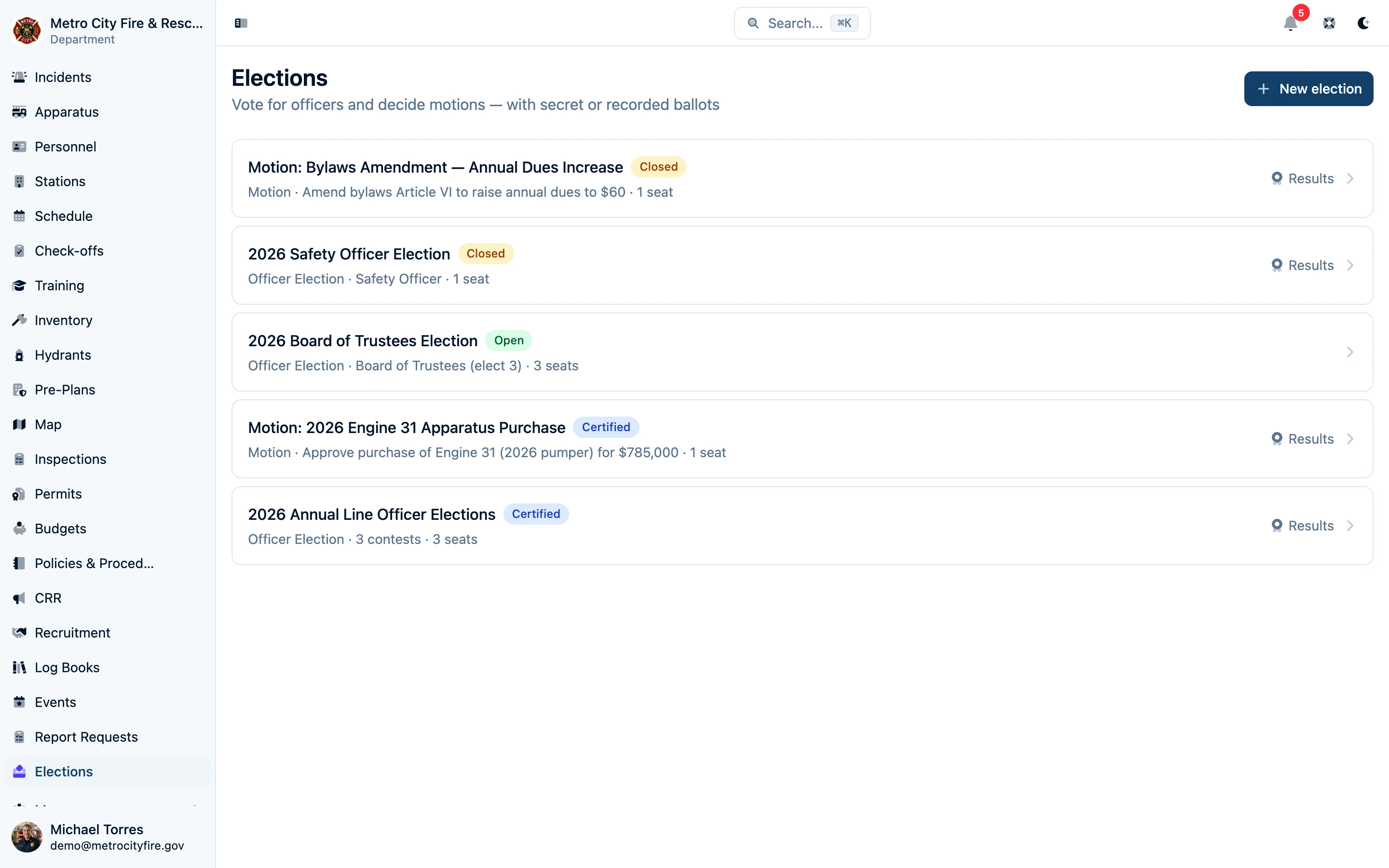
The elections list — officer elections and motions side by side, each tagged with its kind, contest count, and where it stands in the process.
A Secret Ballot That's Actually Secret
Members won't speak freely with a ballot if they think the chief can see how they voted. Command Established runs a true secret ballot by splitting your vote into two records the moment you cast it: one that proves that you voted — so turnout and quorum stay honest and no one votes twice — and a second that carries your choices with no name and no timestamp attached. The link between the two is never stored, so your individual choices can't be traced back to you by anyone. That's anonymity by construction, not by policy.
When you do want names on the record — a roll-call motion, a recorded board vote — switch the ballot to recorded and every vote is attributed. It's your call, set per election.
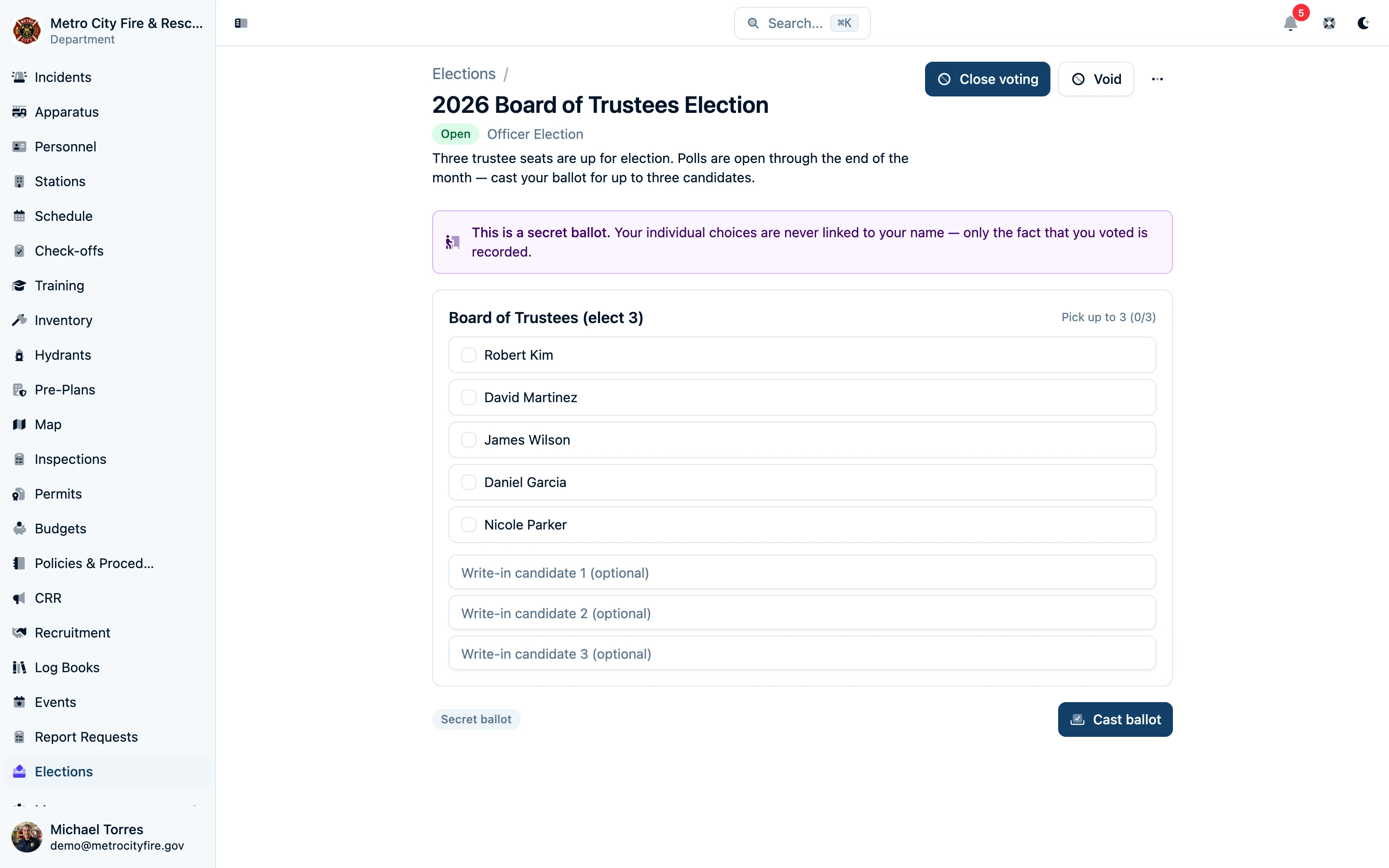
Casting a ballot in an open multi-seat election — a clear "your choices are never linked to your name" notice, and approval voting for up to three trustees.
Quorum and Eligibility, Handled
Who gets to vote, and how many of them have to show up — your bylaws have an answer, and so does Command Established. Limit an election to all members or to specific ranks, and the moment you open voting the eligible roster and its size are frozen: a promotion or a new hire mid-vote can't quietly change who's allowed in or move the quorum bar.
Set a quorum as a flat head count or as a percentage of that frozen roster, and the results screen tells you plainly whether it was met. Short of quorum? An election can still be certified — but only by an owner or admin, and only with a recorded reason, so the exception lives in the audit trail instead of in someone's memory.
Certified, Auditable Results
While an election is open, results stay hidden — so late voters aren't swayed and small contests keep their anonymity. Close the voting and the tally is revealed: votes per candidate, the winner of each contest highlighted, total ballots cast, turnout as a percentage of the eligible roster, and whether quorum was met.
When the outcome is final, an owner or admin certifies it and the results carry a clear "certified and official" mark. A free-text write-in that doesn't match a roster member is flagged unverified for an admin to reconcile first — so a misspelled name never quietly swings a seat.
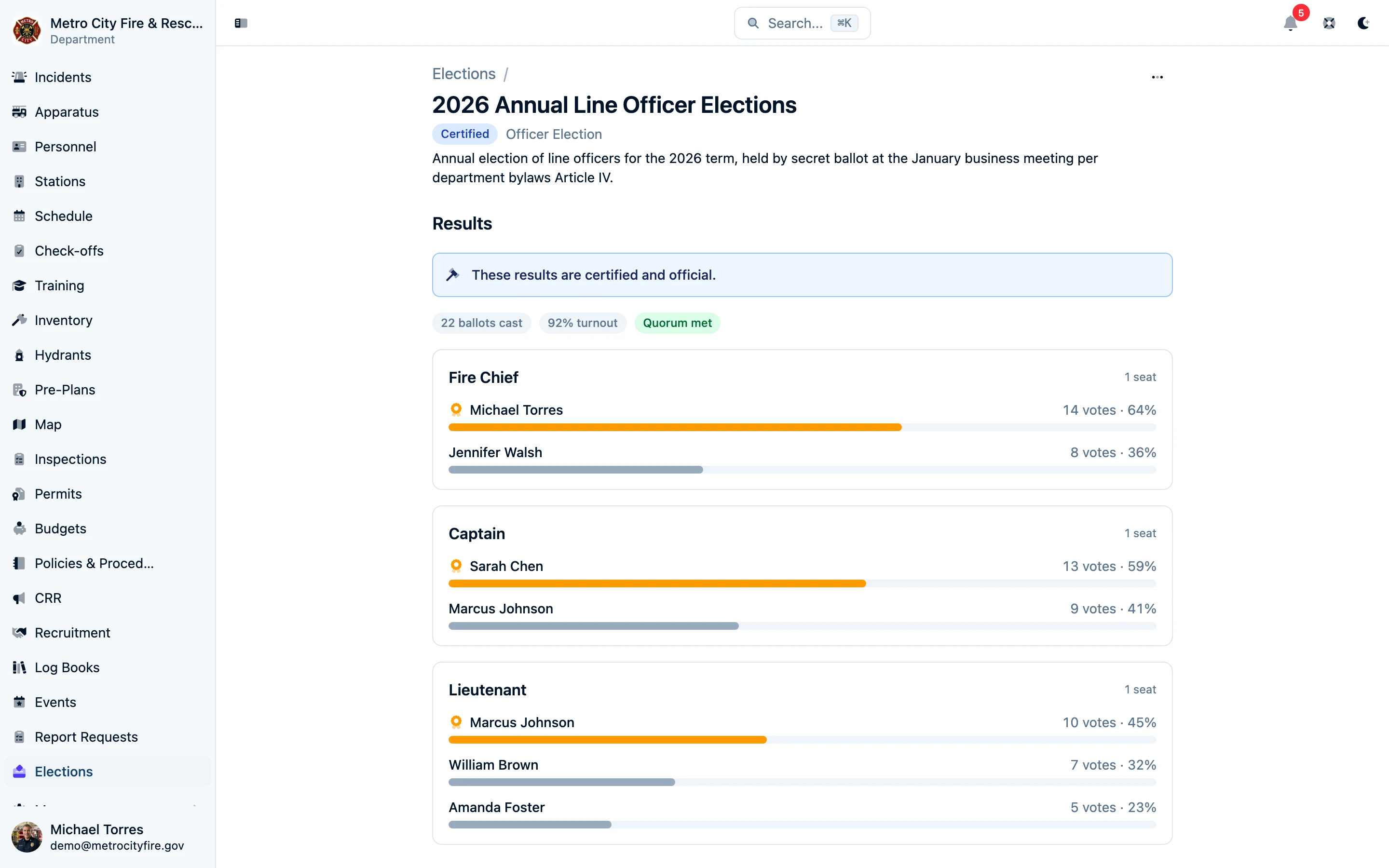
Certified results — each contest tallied, the winner highlighted, turnout and quorum shown up top, and the whole election marked official.
When It's a Tie, a Person Decides — Not the Software
Two candidates finish dead even for the last seat. Command Established won't flip a coin for you — and it won't let you certify around the tie. The result is flagged, and an owner or admin records the tiebreak the way your bylaws prescribe — a chair's vote, a runoff, a coin toss in front of the membership — along with the reason. The decision and who made it go straight into the audit trail, and certification stays blocked until every tie is resolved by a human.
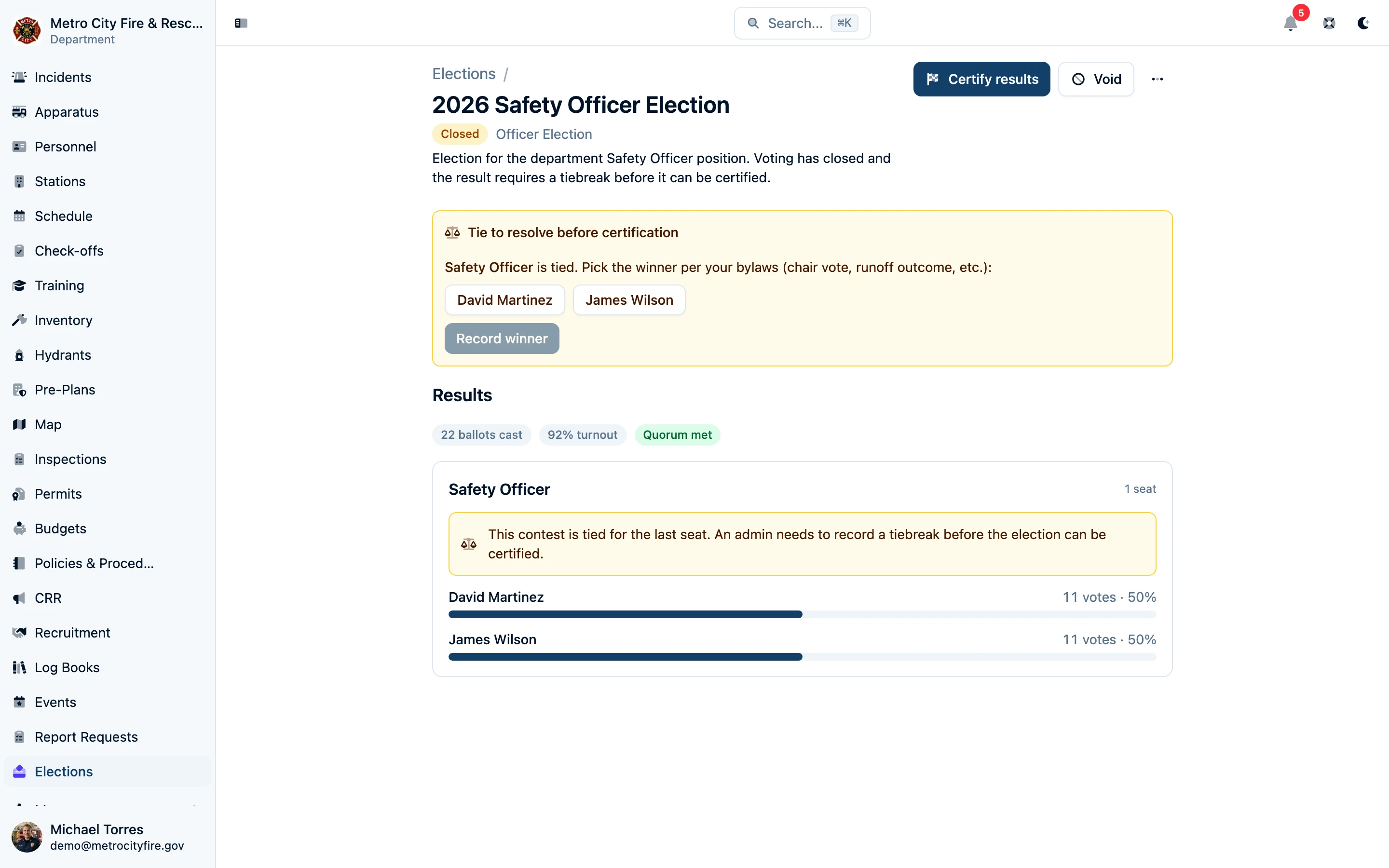
A closed contest that ended in a tie — the tiebreak is recorded by an admin, with a reason, before the election can be certified.
Built for the Record
An election in Command Established is a permanent part of your department's history, the same as an incident or a training record:
- A clear lifecycle — every election moves draft → open → closed → certified, and you can void a run with a recorded reason if it has to be redone. Ballots are never hard-deleted.
- Full attribution — who opened it, who closed it, who certified it, and every tiebreak and quorum override are all logged with a name and a timestamp.
- The right hands — managing elections takes a permission; certifying results and breaking ties are limited to owners and admins. Casting a ballot takes no permission at all — just being on the eligible roster.
When a member, a board, or an auditor asks "how was this decided?", the answer is on the record instead of in a shoebox of paper ballots.
Ready to Run a Cleaner Vote?
Elections & Voting is included with every Command Established subscription — switch it on in your department settings and run your next vote in-app. Start a free trial — no credit card required — and put your next motion to a ballot your members can trust.