
Preparing for Your ISO Evaluation
ISO evaluates fire departments using the Fire Suppression Rating Schedule (FSRS) to determine Public Protection Classification (PPC) ratings. Better ratings mean lower insurance premiums for your community.
What is ISO/PPC?
ISO (Insurance Services Office) evaluates communities' fire protection capabilities and assigns a Public Protection Classification (PPC) rating from 1 to 10. Class 1 represents exemplary fire protection, while Class 10 indicates the minimum requirements have not been met.
Insurance companies use PPC ratings to set property insurance premiums. A better rating can mean significant savings for homeowners and businesses in your community. For volunteer fire departments, improving your PPC rating demonstrates the value you provide to taxpayers and helps justify funding requests.
Understanding the Four Categories
ISO evaluates fire protection across four categories, each contributing a specific number of points to your overall score:
| Category | Max Points | What's Evaluated |
|---|---|---|
| Emergency Communications | 10 | Dispatch systems, CAD, notification systems |
| Fire Department | 50 | Personnel training, equipment, response capabilities |
| Water Supply | 40 | Hydrant coverage, flow testing, inspections |
| Community Risk Reduction | 5.5 | Fire prevention, education, investigation |
Note: While the total possible points add up to 105.5, ISO uses a formula that converts your score to a PPC rating. Generally, you need 90+ points for Class 1, 80-89.99 for Class 2, and so on.
Water Supply (40 points)
ISO evaluates the adequacy of your water supply system, including hydrant coverage, flow rates, and maintenance records. Key metrics include:
- Hydrant distribution and coverage within your service area
- Flow test results showing adequate water supply (measured in GPM)
- Hydrant condition and NFPA class ratings (AA, A, B, C)
- Regular inspection and maintenance documentation
How Command Established Helps with Water Supply
Command Established provides comprehensive hydrant management with GPS mapping, NFPA 291 flow testing, and automatic GPM calculations:
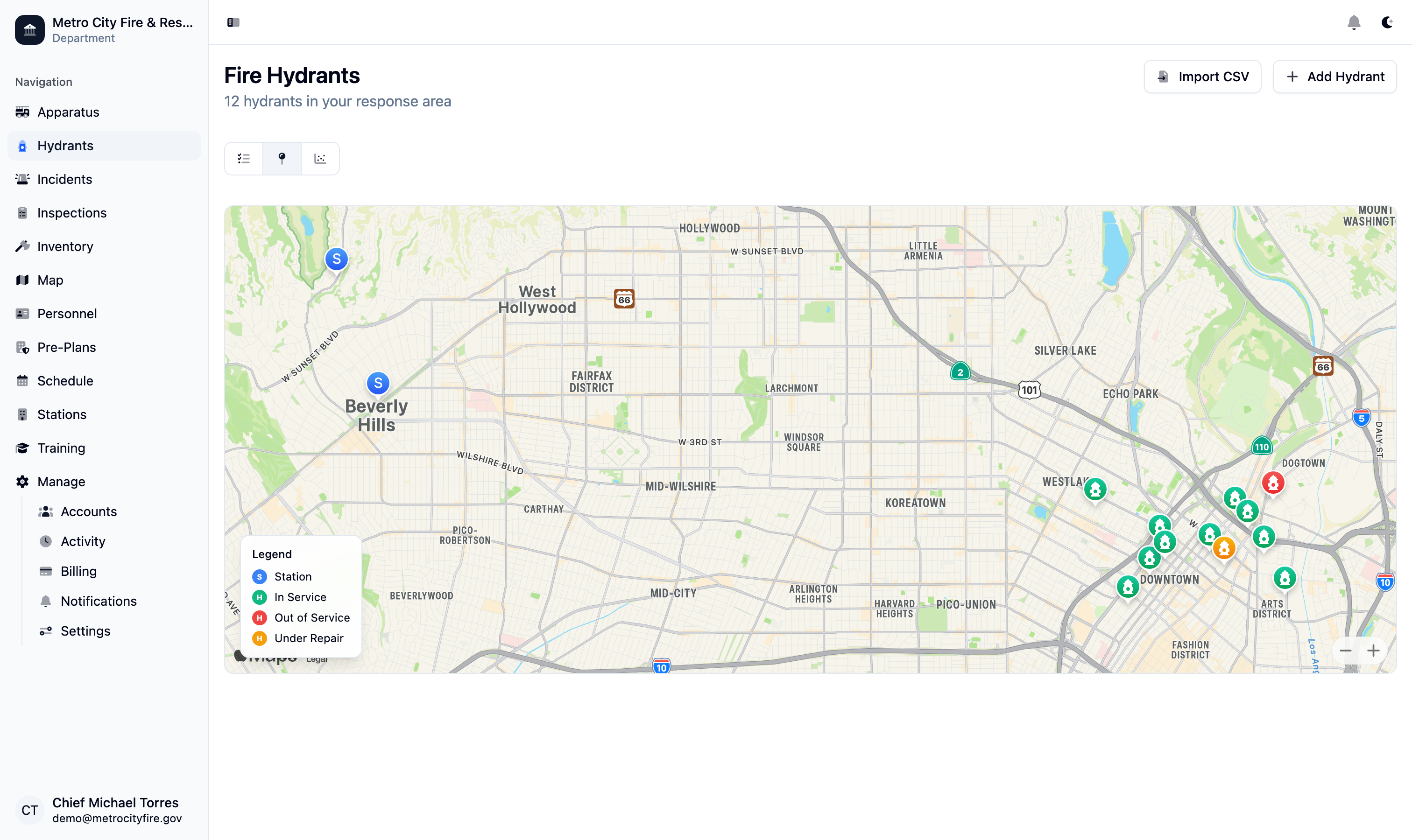
Interactive hydrant map with GPS locations and NFPA class color coding
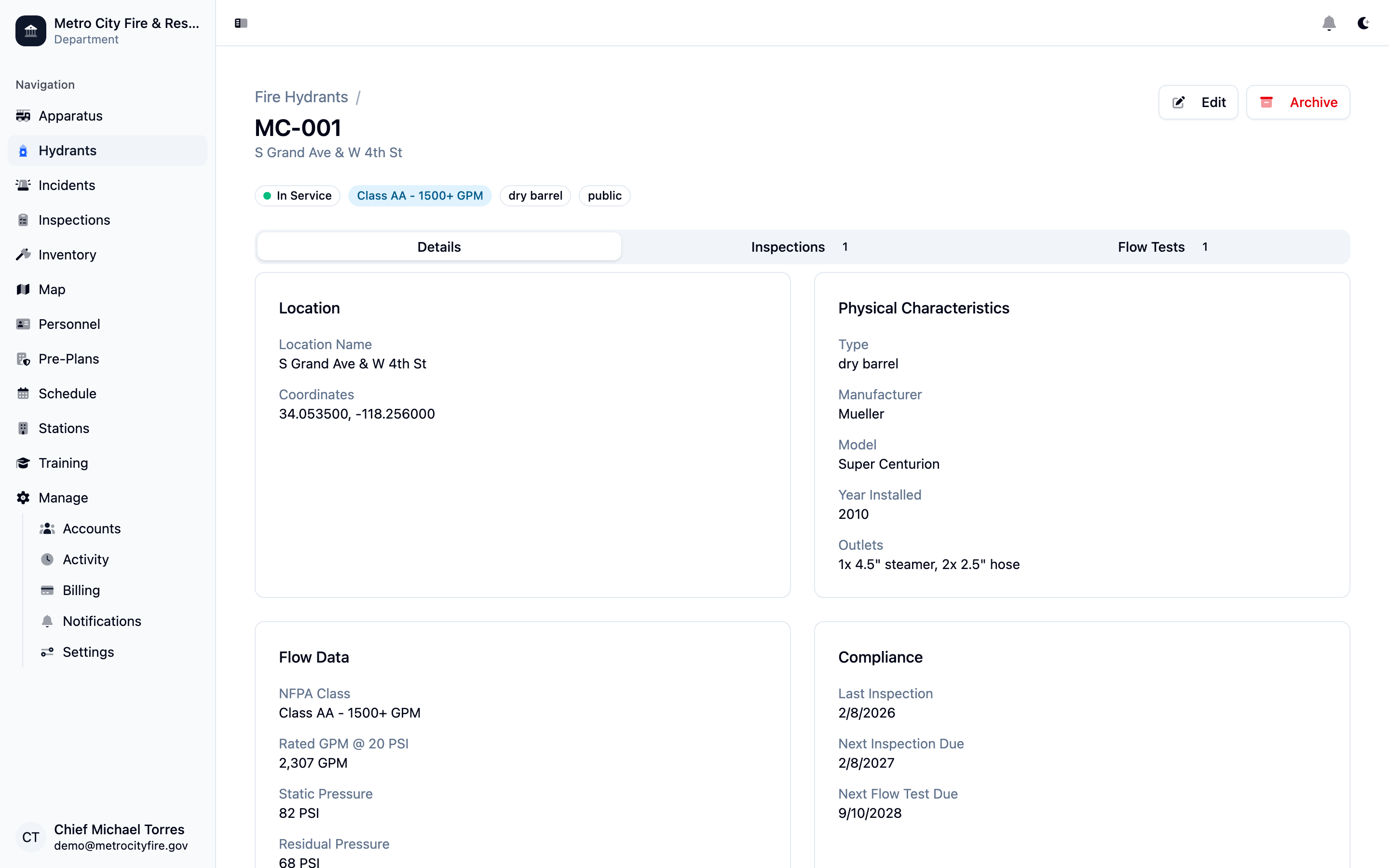
Detailed hydrant records with flow test history, GPM calculations, and NFPA class determination
Pro Tip: Schedule regular flow tests and keep detailed records. ISO wants to see that you're actively maintaining your water supply infrastructure, not just that it existed at one point in time.
Fire Department (50 points)
This is the largest category, evaluating your department's ability to respond to and suppress fires. ISO looks at:
- Personnel training records aligned with NFPA standards
- Number of trained firefighters available for response
- Apparatus and equipment condition and capabilities
- Response time metrics and geographic coverage
- Company training frequency and documentation
How Command Established Helps with Fire Department Records
Track personnel certifications with expiration alerts and maintain comprehensive training records:
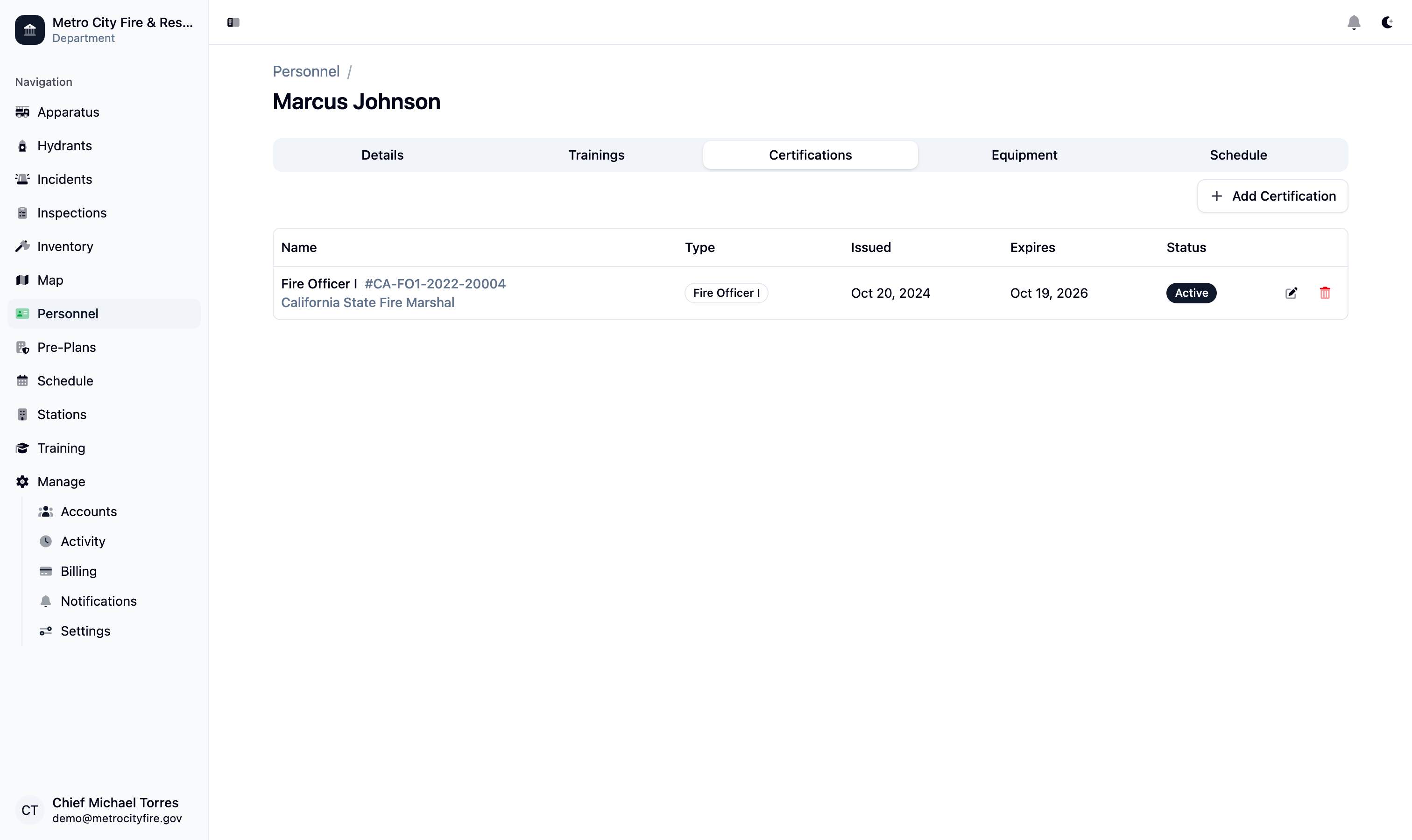
Personnel certification tracking with expiration dates and renewal alerts
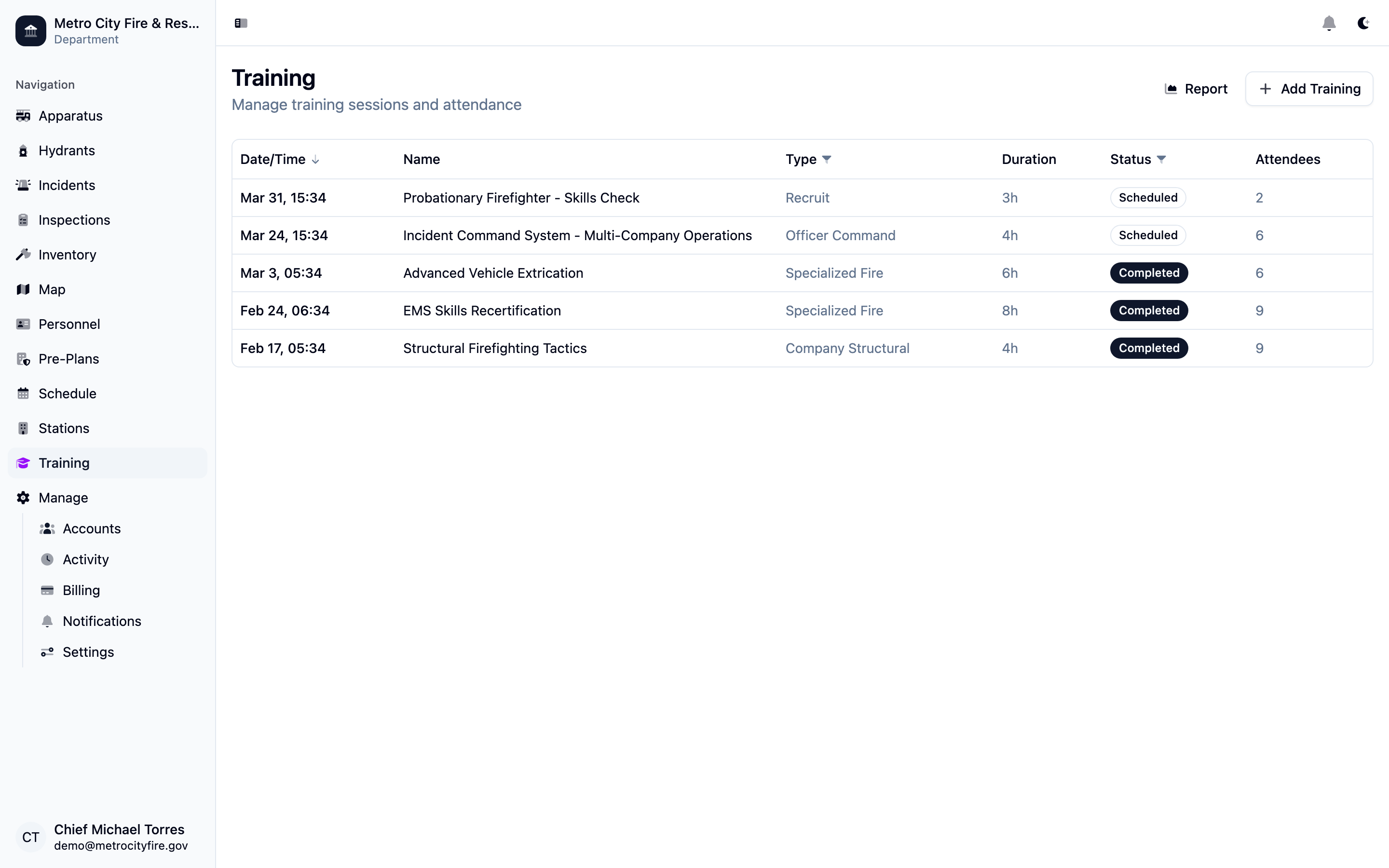
Training session management with hours tracking and attendance records
Important: ISO credits training hours for all firefighters, not just officers. Make sure you're tracking and documenting all company training, even informal sessions.
Emergency Communications (10 points)
ISO evaluates your dispatch and communication systems, including how quickly calls are processed and units dispatched. Key factors include:
- Dispatch center capabilities and staffing
- CAD (Computer Aided Dispatch) systems
- Call processing and dispatch times
- Mutual aid agreements and communication interoperability
How Command Established Helps with Communications
Import incidents from your CAD system and track response time metrics including dispatch, en-route, and on-scene times:
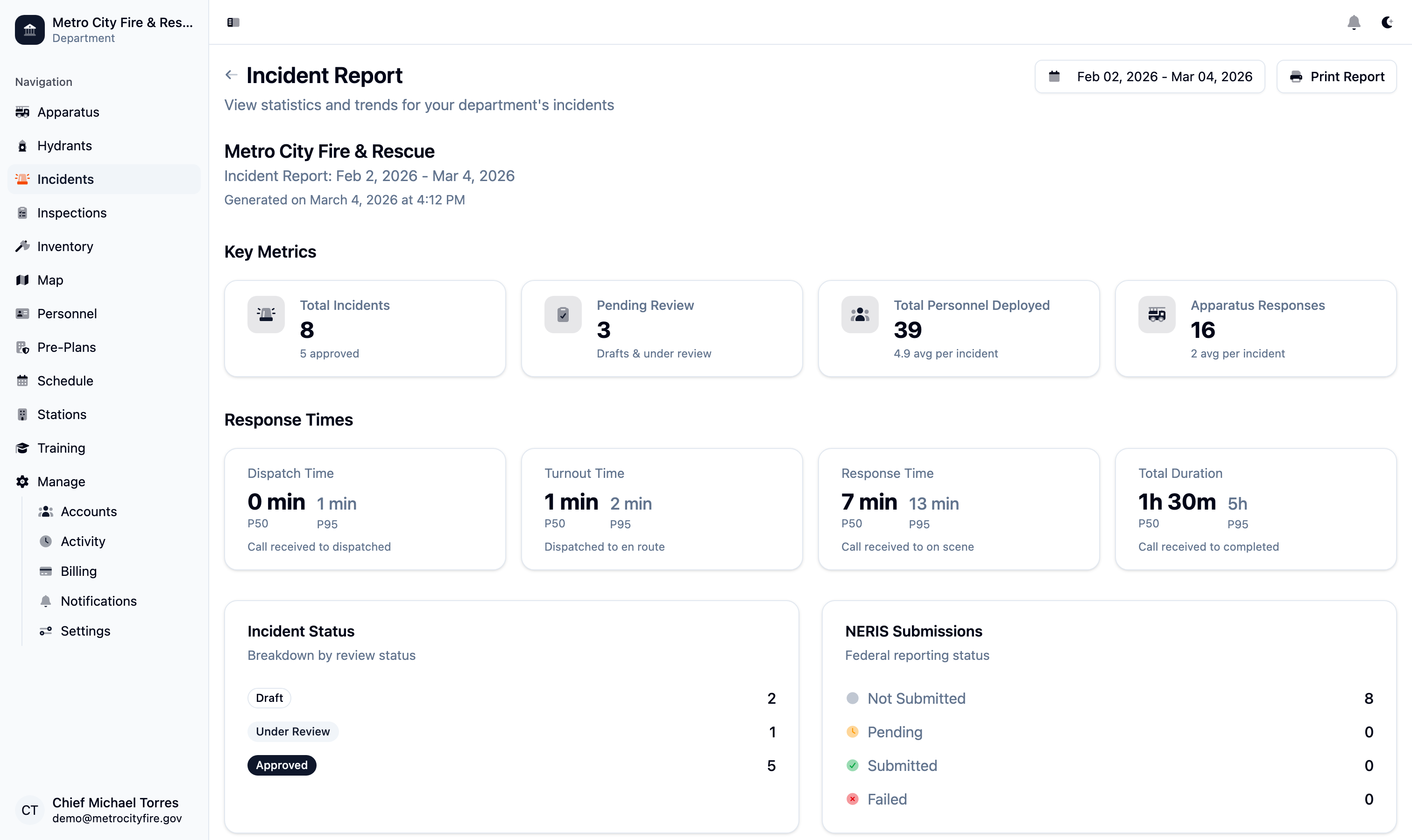
Comprehensive incident reports with response metrics and full incident timeline
Community Risk Reduction (5.5 points)
This bonus category rewards departments that go beyond suppression to actively reduce fire risk in their communities:
- Fire prevention inspections and code enforcement
- Public fire safety education programs
- Fire investigation capabilities
- Risk analysis and pre-incident planning
How Command Established Helps with Risk Reduction
Comprehensive incident documentation and statistical reporting help you identify trends and demonstrate your risk reduction efforts:
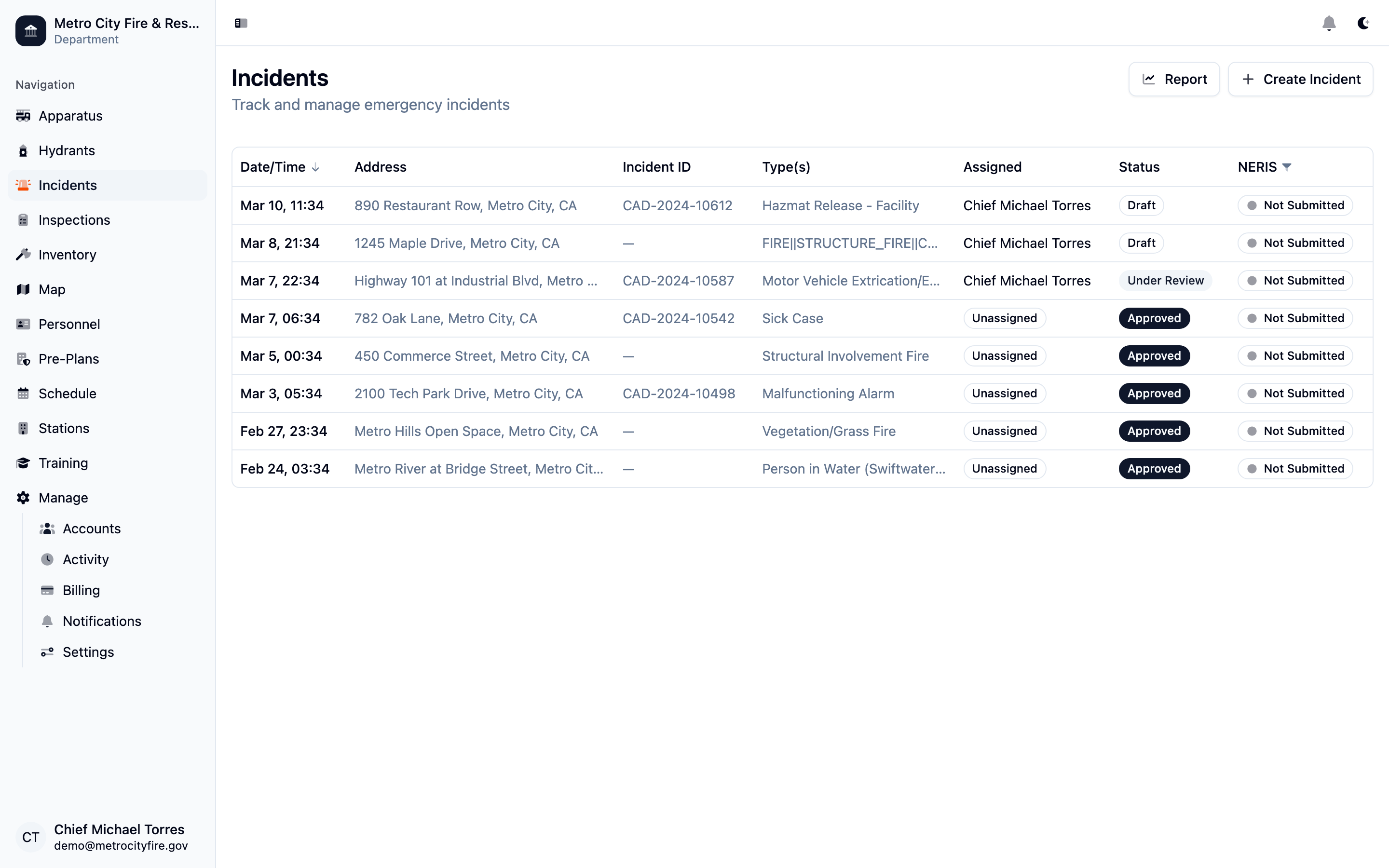
Incident list with filtering and search capabilities for trend analysis
ISO Preparation Checklist
Start preparing well before your scheduled evaluation. Here's what to focus on:
Documentation to Gather
- Complete roster with certifications and training hours
- Hydrant flow test records (within the past 5 years)
- Apparatus maintenance and pump test records
- Incident response records with timestamps
- Mutual aid agreements with neighboring departments
- Pre-incident plans for target hazards
Ready to Improve Your ISO Rating?
Command Established helps volunteer fire departments maintain the records and documentation needed for successful ISO evaluations. Start tracking your hydrants, personnel, training, and incidents today.